
DAMAGED SLIDING DOOR TRACK REPLACEMENT
When a Track Is Too Damaged to Repair
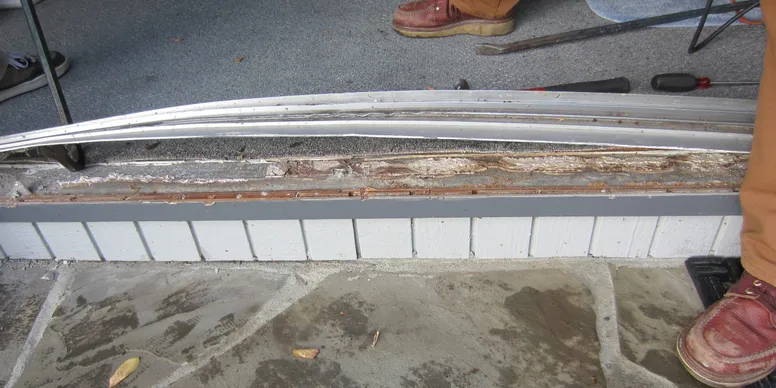
Sometimes a sliding door track is simply worn past the point of a reliable fix. If the runner rail (often called the track bead) is full of dents, waves, or deep grooves, the door can’t roll smoothly no matter how many times the rollers are adjusted. This level of damage is often caused by using the wrong roller type—such as hard steel rollers riding on a softer aluminum surface—or by years of dragging a door with frozen or worn rollers. In these situations, a complete sliding glass door track replacement is the most effective way to restore performance and prevent the door from damaging new rollers again.
Removing the Old Sliding Door Track
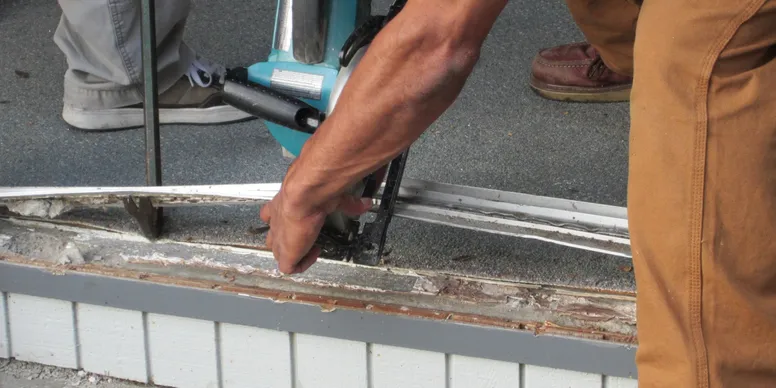
Full track replacement isn’t a “patch job.” The old bottom track must be removed carefully so the surrounding frame and opening remain intact. This is one of those repairs that looks simple when it’s done correctly—but it requires the right tools, the right process, and experience with different patio door systems. When the removal is done properly, it sets the stage for a clean install and a track that sits straight, drains correctly, and supports the door the way it should.
Prepping the Opening for the New Bottom Track
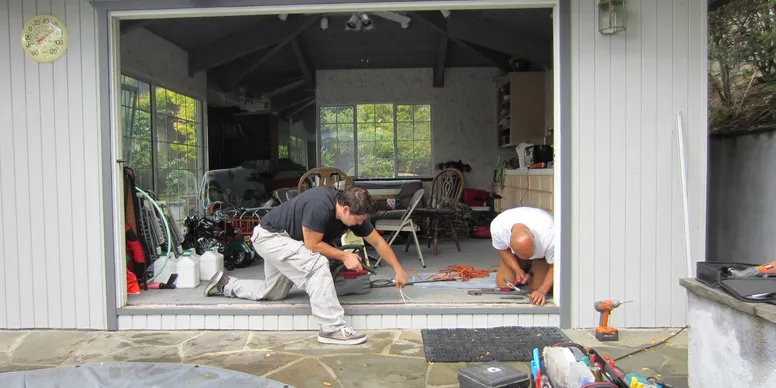
Once the damaged track is out, preparation is everything. Old sealant must be cleared, the surface must be cleaned, and the corners must be addressed before the new track goes in. Skipping this step is one of the main reasons tracks end up leaking after replacement. Proper prep ensures the new sliding door track seats correctly, seals properly, and performs well long-term—especially in coastal environments where moisture management matters.
Clean Worksite, Careful Installation
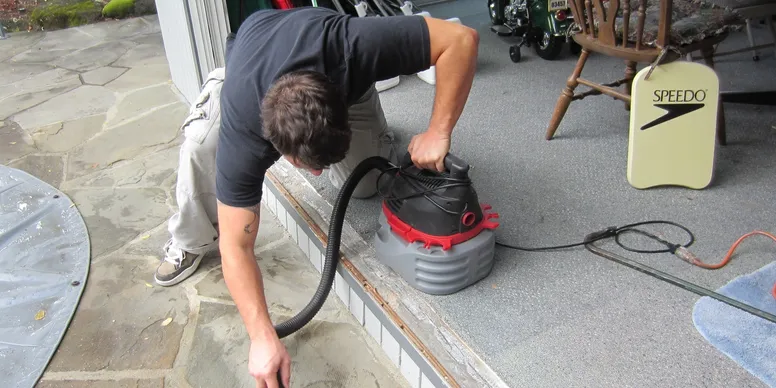
Track replacement can be messy by nature, but the job should never feel chaotic. We keep the work area controlled and tidy throughout the process—removing debris as we go, keeping the opening protected, and leaving the space clean once installation is complete. Clean work isn’t just about appearance; it helps prevent mistakes and keeps the installation safer and more precise.
Sealing It Correctly to Prevent Leaks
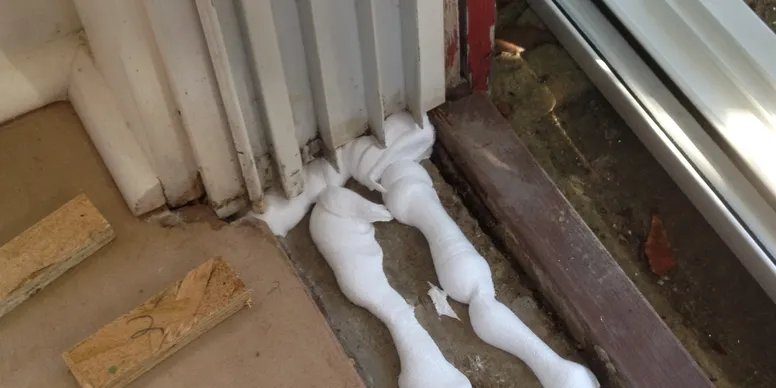
Preventing leaks starts before the new track is fully installed. The most critical sealing points are under the track and behind the corners, where water intrusion typically begins. Sealing only after the track is already in place is often too late to do it properly. A correct track replacement includes the right sealant in the right locations, applied at the right time, so the system directs water where it belongs—outside.
Track Replacements Done the Right Way
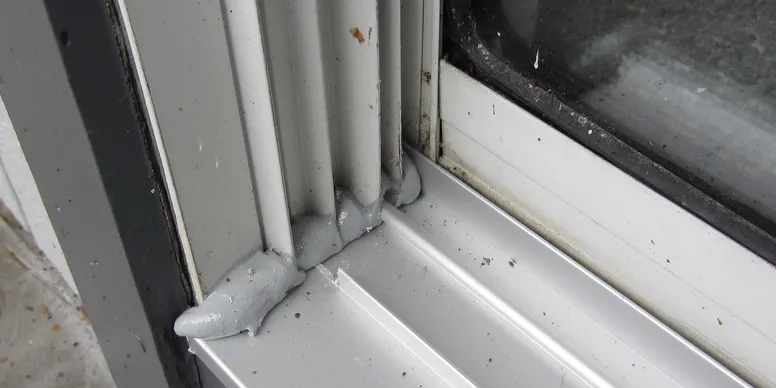
Once the new track is installed and sealed, the final setup matters just as much as the track itself. That includes installing correctly matched rollers, setting the panels back into place, aligning the door for smooth travel, and confirming the door closes and locks securely. To protect the new running surface, we recommend adding a stainless steel track cap (track saver) so the track bead stays smooth and resists future dents and wear.